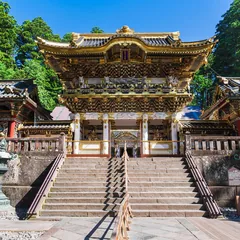
The shrine
Nikko Toshogu: the most decorated building in Japan
Everything most visitors know about Japanese architecture — plain cedar, restraint, empty space — is true, and Toshogu is the deliberate exception to all of it. It is a tomb, it was paid for by the family that had just ended a century of civil war, and the extravagance is the argument.
Quick answer
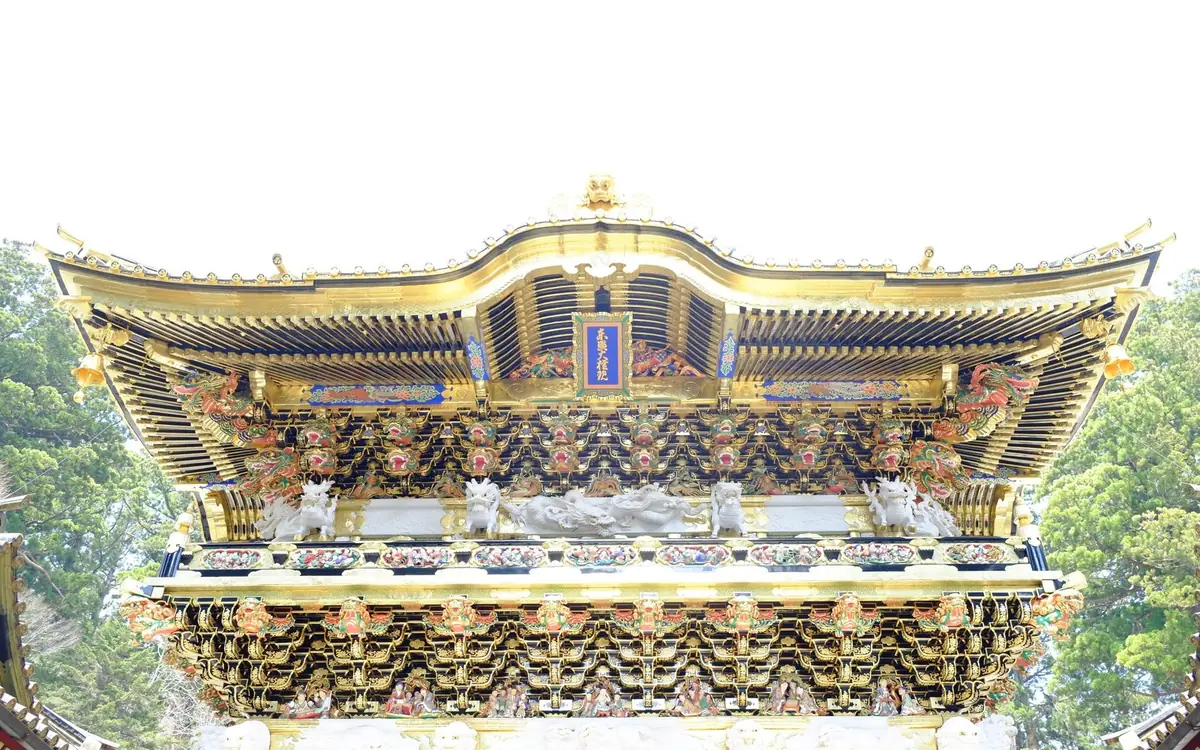
Nikko Toshogu is the mausoleum of Tokugawa Ieyasu, founder of the shogunate that ruled Japan for over 250 years. It was built in 1617 by his son Hidetada and rebuilt on its present scale by his grandson Iemitsu in the 1630s. Its Yomeimon gate carries 508 separate carvings, none repeated. It has been a UNESCO World Heritage Site since 1999, and day tours from Tokyo start at $66.
Nikko Toshogu, at a glance
- What it is
- A mausoleumthe tomb of Tokugawa Ieyasu
- Built
- 1617rebuilt on this scale in the 1630s
- Rebuilt by
- IemitsuIeyasu’s grandson, third shogun
- Yomeimon carvings
- 508and no two of them are the same
- One column
- Upside downon purpose, so the gate is not perfect
- Three wise monkeys
- On the stableone panel of a sequence of eight
- UNESCO listed
- 1999with Futarasan and Rinnoji
- From Tokyo
- ~2 hourseach way
- Time needed
- 2 hoursfor the complex, and it is not too long
- Day tours from
- $66entry included on all of them
Why the gold
Why is Nikko Toshogu so ornate?
A grandson spending a fortune to say what the family had become.
Because it is a political statement disguised as a tomb.
Tokugawa Ieyasu won the battle that ended Japan’s century of civil war and founded a shogunate that would hold power until 1868. He died in 1616 and was buried here the following year in a shrine his son Hidetada built — a comparatively modest one.
What you see now is his grandson’s work. Iemitsu, the third shogun, rebuilt the whole complex in the 1630s on a scale that has no equivalent anywhere in Japanese religious architecture: gold leaf across the eaves, lacquer in black and vermilion, and carving on every available surface. The cost was enormous and it was meant to be legible as such.
That is why it strikes visitors the way it does. Japanese aesthetic tradition prizes restraint, and Toshogu abandons restraint entirely and on purpose. Standing in front of the Yomeimon gate you are looking at what absolute power in the seventeenth century chose to spend money on, which is a more interesting thing to look at than a beautiful building.
What to look for
Six things at Toshogu that reward a second look
Most visitors photograph two of these and walk past four.
- The Yomeimon gate, for twenty minutes
508 carvings and not one repeats: children at play, sages, dragons, lions and creatures nobody has ever identified. It rewards standing still far longer than people give it.
- The upside-down column
One of the gate’s twelve supporting columns has its pattern inverted. The explanation given is that a perfect building invites misfortune, so an error was built in deliberately.
- All eight monkey panels, not one
The three wise monkeys are the second panel of eight on the sacred stable, telling a life from childhood to parenthood. Almost everybody photographs one and misses the story.
- The sleeping cat
A small carving above the gate to the path leading up to the tomb itself. It is signposted, because otherwise nobody would find it, and it is much smaller than the fuss suggests.
- The five-storey pagoda
At the entrance, and Buddhist rather than Shinto — a reminder that the two traditions shared sites for centuries before they were separated in the 1870s.
- The 200 steps to the tomb
Behind the sleeping cat, up through cedar. The tomb itself is plain, which after two hours of gold leaf is the most eloquent thing on the site.
The shrine is the first half of a Nikko day. The second half is a mountain road and a waterfall, and not every tour goes.
The lake and the road up→Every trip, current fare
Every tour that includes Toshogu
Twelve tours, cheapest first, with the column that matters: whether Lake Chuzenji is included as well. Entry to the shrine complex is in the price on all of them.
| Tour | Length | Price | Lake Chuzenji | Cost per hour | Rating |
|---|---|---|---|---|---|
| Private Tour with English-Speaking GuideA private guide at a coach price | 10 h | $66 | If you want it | $6.60 | 5.0 · 45 |
| World Heritage Sites & Hot Spring Day TripThe World Heritage sites and a hot spring | 10 h | $71 | Not included | $7.10 | 5.0 · 1 |
| Kegon Falls, Lake Chuzenji & ToshoguThe most-reviewed Nikko day, lake included | 10.5 h | $74 | Included | $7.05 | 4.6 · 2,272 |
| Toshogu Shrine and Lake Chuzenji Day TripToshogu and the lake, no waterfall stop | 10 h | $75 | Included | $7.50 | 4.4 · 33 |
| Toshogu Shrine and Kegon Waterfall TourThe shrine and the waterfall, most booked | 10.5 h | $83 | Falls only | $7.90 | 4.5 · 1,506 |
| Guided Day Trip to the World Heritage SitesAll three World Heritage sites | 10 h | $88 | Not included | $8.80 | 4.7 · 75 |
| Private Customizable Day Tour with DriverA driver, a vehicle and your own itinerary | 10 h | $303 | If you want it | $30.30 | 5.0 · 26 |
| Full-Day Personal and Private TourA private day, rated 4.9 | 10 h | $311 | If you want it | $31.10 | 4.9 · 316 |
| World Heritage Site Private Day TripA private car and driver | 10 h | $337 | If you want it | $33.70 | 5.0 · 1 |
| Nikko Day Tour with English DriverAn English-speaking driver, flexible route | 10 h | $342 | Included | $34.20 | 4.8 · 23 |
| Private Tour: Toshogu Shrine & Kegon FallsToshogu, the lake and the falls, privately | 10 h | $397 | Included | $39.70 | 4.4 · 11 |
| World Heritage Site Private Full-Day TripThe most complete private day here | 10–11 h | $458 | If you want it | $43.62 | 5.0 · 436 |
The other two
What else is in the World Heritage listing?
Futarasan and Rinnoji, and the tomb built to be less grand.
Two more sites, and about half the tours on this page skip them.
Futarasan Shrine is older than Toshogu by six centuries and looks it: plain wood, moss, quiet. It is dedicated to the three mountains that surround Nikko, including Nantai above the lake. After the gold of Toshogu it reads almost as a rebuke, and it is a five-minute walk away.
Rinnoji is a Buddhist temple complex, and its Taiyuin is the mausoleum of Iemitsu — the grandson who built Toshogu. He asked to be buried facing his grandfather, and he asked that his own tomb be deliberately less grand. It is, and it is also, for a lot of visitors, the more beautiful of the two.
The 1999 UNESCO inscription covers all three together with 103 buildings and the forest they stand in. A tour that only visits Toshogu is giving you the famous third of the site, which is a fair choice on a ten-hour day — but it is worth knowing that is what is happening.
Common questions
Nikko Toshogu, answered
What is Nikko Toshogu?
The mausoleum of Tokugawa Ieyasu, founder of the Tokugawa shogunate. It was built in 1617 by his son and rebuilt on its present scale by his grandson Iemitsu in the 1630s, and it is the most lavishly decorated religious complex in Japan.
Why is Toshogu so decorated?
It was a statement of power. Iemitsu rebuilt his grandfather’s tomb at enormous expense in the 1630s, using gold leaf, lacquer and carving on a scale with no equivalent in Japanese religious architecture. The extravagance is deliberate and legible.
How many carvings are on the Yomeimon gate?
508, and none of them repeats. They include children, sages, dragons and mythical beasts, and one supporting column is set upside down on purpose so the gate is not perfect.
Where are the three wise monkeys at Nikko?
On the sacred stable at Toshogu. They are one panel in a sequence of eight telling a life story from childhood onward, and the carving predates the English phrase by centuries.
How long do you need at Nikko Toshogu?
Two hours is right for the complex and it is not too long. A tour that allocates one hour is moving you through it rather than showing it to you.
Is Nikko Toshogu a UNESCO site?
Yes, since 1999, as part of the Shrines and Temples of Nikko together with Futarasan Shrine and Rinnoji Temple, covering 103 buildings and their setting.
Is entry to Toshogu included on tours?
Yes, on every tour on this page. Arriving independently, the shrine complex charges its own admission.
Go deeper
More on Nikko
A day trip from Tokyo
Ten hours, four of them travelling, and what fits into the rest.
Getting thereTokyo to Nikko
Two railways, two hours, and which pass covers what.
All threeThe shrines and temples
Toshogu, Futarasan and Rinnoji, and what UNESCO listed.
The gateThe Yomeimon gate
508 carvings, no two the same, and one column upside down.
The monkeysThe three wise monkeys
One panel of eight, and the seven nobody photographs.
The waterfallKegon Falls
Ninety-seven metres out of a lake, and the lift to the base.